Black White Floral Corner Designs: A Timeless Design Element
In the vast landscape of digital and print design, few elements possess the enduring elegance of a well-crafted border. Among these, Black White Floral Corner Designs stand out as a versatile tool for creators seeking to add sophistication without overwhelming a layout. These designs are not merely decorative; they serve as structural anchors that guide the eye, frame content, and infuse a project with a sense of curated style. Whether you are a professional graphic designer, a small business owner creating marketing materials, or a hobbyist crafting personalized stationery, understanding the utility and application of these specific floral motifs can significantly elevate your creative output.
The Art of Monochromatic Florals
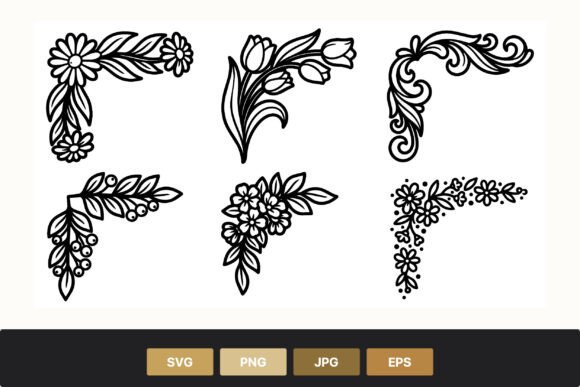
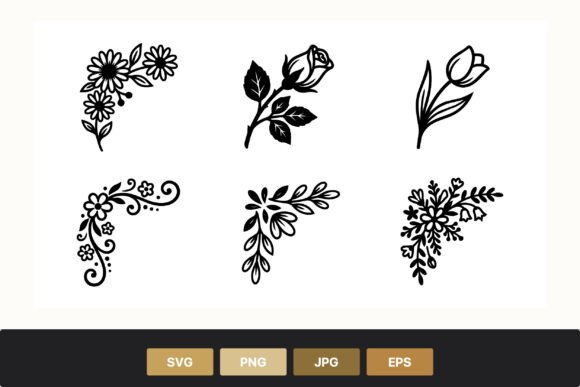
The appeal of black and white aesthetics lies in its ability to transcend trends. Unlike colorful patterns that may date quickly, monochromatic line art remains perpetually relevant. When applied to floral corner designs, this simplicity allows the intricate details of the botanical subjects to take center stage. The collection features six distinct variations, each meticulously crafted to balance complexity with clarity. You will find delicate roses symbolizing romance and tradition, elegant tulips representing spring and renewal, cheerful daisies offering a touch of innocence, and sophisticated decorative leafy elements that provide texture and movement.
The "simple line art style" is a deliberate choice that enhances versatility. By stripping away shading and gradients, these designs rely on the strength of their outlines. This approach ensures that the artwork remains crisp at any size, from a tiny icon on a mobile screen to a massive banner on a billboard. For designers, this means fewer headaches regarding resolution and scaling. The stark contrast between the black ink and the white background creates a visual pop that draws attention immediately, making it an ideal choice for highlighting important information or framing a central image.
Technical Flexibility: Understanding the File Formats
One of the most significant advantages of acquiring high-quality Black White Floral Corner Designs is the comprehensive nature of the file delivery. In the modern workflow, flexibility is paramount. A single compressed ZIP file containing multiple formats ensures that the assets are ready for almost any production scenario. Let's break down why this variety matters for different types of users:
- SVG (Scalable Vector Graphics): This format is the gold standard for web and vector editing. Because SVGs are math-based rather than pixel-based, they can be resized infinitely without losing quality. If you need to adjust the stroke width of a rose petal or change the color of a tulip stem to match a brand palette, SVG files allow for direct manipulation in software like Adobe Illustrator or Inkscape.
- PNG (Portable Network Graphics): Perfect for digital applications where transparency is key. PNG files allow the floral corners to sit seamlessly over colored backgrounds, photos, or gradients without an unsightly white box around them. This is essential for social media posts, website headers, and digital invitations.
- EPS (Encapsulated PostScript): Designed for professional print environments, EPS files are compatible with high-end design applications and pre-press workflows. They ensure that when your design goes to a commercial printer, the lines remain sharp and the colors are accurate, avoiding the blurriness often associated with raster images.
- JPG (Joint Photographic Experts Group): While less flexible than vectors, JPGs offer universal compatibility. If you are working in a basic photo editor or need to share a preview with a client who doesn't have design software, the JPG version provides immediate usability.
This multi-format approach eliminates the need for complex conversions, saving time and reducing the risk of file corruption. It empowers users to choose the right tool for the job without being constrained by technical limitations.
Real-World Applications and Scenarios
The utility of Black White Floral Corner Designs extends far beyond simple decoration. Consider how these elements function in various practical scenarios:
Wedding and Event Stationery: The timeless nature of black and white florals makes them perfect for wedding invitations, save-the-date cards, and menu programs. A pair of corner roses can frame a couple's names elegantly, while daisy accents might suit a rustic or garden-themed event. Because the designs are neutral, they do not clash with other design elements, allowing typography and paper texture to shine.
Branding and Corporate Identity: Businesses often struggle to incorporate organic shapes into corporate branding without appearing unprofessional. These line-art floral corners offer a solution. A law firm might use subtle leafy elements to soften a stark document header, while a boutique clothing brand could use bold tulip corners on packaging tags to convey freshness and style. The monochromatic scheme ensures the brand remains cohesive even when introducing new textures.
Digital Content Creation: For social media managers and content creators, these designs are invaluable for creating engaging thumbnails, Instagram stories, and blog post headers. The transparent PNG versions allow creators to overlay the floral corners onto lifestyle photography, adding a layer of polish that distinguishes their content from competitors. The clean lines also work exceptionally well in minimalist UI design, guiding user interaction without cluttering the interface.
Crafting and DIY Projects: Hobbyists using cutting machines like Cricut or Silhouette can import the SVG files to create custom stickers, scrapbook layouts, and home decor items. The precision of the line art ensures clean cuts, resulting in professional-looking handmade goods.
Evaluating Suitability for Your Project
While Black White Floral Corner Designs are incredibly versatile, they are not a one-size-fits-all solution. Before integrating them into your workflow, consider the following factors to ensure they meet your specific needs:
- Context and Tone: Assess whether the formal or romantic connotation of floral imagery aligns with your message. While generally safe, overly ornate floral borders might feel out of place in a highly technical report or a modern, brutalist design context.
- Color Palette Constraints: Although the designs are black and white, consider if your project requires full-color illustrations. If your brand identity relies heavily on vibrant, saturated colors, these monochromatic elements might need to be recolored or used sparingly as accents rather than focal points.
- Complexity vs. Clarity: In very small applications, such as a favicon or a tiny app icon, the intricate details of the leaves and petals might become indistinguishable. Always test the design at the intended final size to ensure legibility.
- Licensing and Usage Rights: Always verify the license terms associated with the download package. While many such packages are royalty-free for personal and commercial use, some may have restrictions on resale or modification. Ensuring compliance protects both you and the original artist.
Conclusion: Elevating Design with Simplicity
The power of Black White Floral Corner Designs lies in their ability to enhance a project through subtraction rather than addition. By removing unnecessary color and focusing on the purity of line and form, these six unique designs—featuring roses, tulips, daisies, and leafy accents—offer a refined aesthetic that speaks volumes. The inclusion of diverse file formats within a single ZIP package further cements their value, providing the technical foundation needed for everything from web development to large-scale printing.
For the general consumer looking to personalize a gift, the professional designer aiming for a polished finish, or the business owner striving for a memorable brand presence, these floral elements offer a reliable and stylish solution. They remind us that sometimes, the most effective design choices are the simplest ones. By incorporating these timeless motifs, you invite a sense of order, beauty, and professionalism into your creative endeavors, ensuring your work stands out in a crowded digital and physical world.