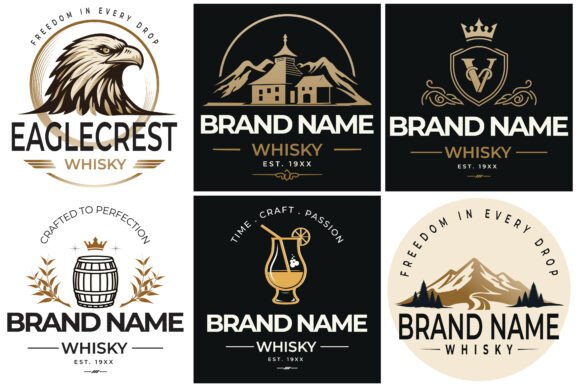
The Timeless Appeal of Whisky Vintage Logo Vector Illustrations in Modern Branding
In the competitive landscape of the spirits industry, visual identity is often the first handshake a brand offers to its potential customer. Whether it is a small-batch bourbon, a premium scotch, or an artisanal rum, the label serves as the primary storyteller. Among the most effective tools for conveying history, quality, and character are Whisky Vintage Logo Vector Illustrations. These digital assets bridge the gap between old-world craftsmanship and modern design workflows, offering brands a way to project luxury and authenticity without sacrificing scalability.
Why Vectors Define the Premium Spirit Experience
The choice of file format is rarely just a technical decision; it is a strategic one. When designers create a logo for a high-end beverage, they require flexibility that raster images simply cannot provide. Whisky Vintage Logo Vector Illustrations are built on mathematical equations rather than pixels. This means that whether the design appears on a tiny bottle neck tag or a massive billboard at a trade show, the lines remain crisp, the details sharp, and the integrity of the retro aesthetic intact.
Consider the intricate details often found in vintage branding: ornate frames, serif fonts, and delicate line work depicting barrels or hops. In a raster format, zooming in can lead to pixelation and blurriness, which immediately signals "cheap" to a consumer expecting a luxury product. With vector graphics, a premium brand ensures that every curve of a glass or every leaf on a decorative wreath remains perfect at any size. This scalability is essential for the diverse applications required in the alcohol industry, from packaging and coasters to bar signage and merchandise.
The Anatomy of a Vintage Emblem
What makes a logo feel authentically vintage? It is not merely about adding a sepia filter or choosing an old-fashioned font. True vintage design relies on specific elements that evoke a sense of heritage and tradition. Whisky Vintage Logo Vector Illustrations typically incorporate several key characteristics:
- Ornate Frames and Borders: Double-lined borders, filigree patterns, and geometric shapes that enclose the central imagery, reminiscent of 19th-century apothecary labels.
- Classic Typography: The use of serif typefaces, blackletter scripts, or bold slab serifs that suggest stability and longevity.
- Symbolic Imagery: Icons such as oak leaves, wheat stalks, anchors, shields, and barrels that connect the drinker to the ingredients and the process of aging.
- Color Palettes: While vectors are resolution-independent, the color choices often lean towards deep golds, rich ambers, forest greens, and charcoal blacks to mimic the look of aged paper and ink.
These elements combine to create a badge or emblem that feels established, even if the brand itself is new. For a startup brewery or a distillery launching a new line of vodka or brandy, adopting this style allows them to borrow the credibility of the past.
Integrating Retro Aesthetics into Modern Workflows
One might assume that creating vintage-style art requires traditional hand-drawing techniques, but the reality of modern graphic design is far more efficient. Designers today utilize powerful software to craft Whisky Vintage Logo Vector Illustrations with precision. The workflow begins with concept sketches—often done by hand to capture the organic feel of the era—but quickly moves into vector environments where every anchor point can be adjusted.
This digital approach offers significant advantages for production. Once a vector logo is finalized, it can be easily adapted for various media. A single file can be converted into a die-cut shape for a bottle cap, engraved onto a metal shaker, or printed on a canvas poster for a pub wall. The ability to manipulate individual layers within the vector file allows for rapid prototyping. If a client wants to swap the gold accent for silver or change the font weight slightly, the designer can make these adjustments instantly without redrawing the entire illustration.
Furthermore, the versatility of vector files supports the growing trend of eco-friendly packaging. Many distilleries are moving away from heavy, multi-layered stickers toward minimalist, embossed designs or direct printing on glass. Vector illustrations ensure that these subtle textures translate perfectly, maintaining the luxury feel while reducing waste.
Applications Beyond the Bottle
The utility of Whisky Vintage Logo Vector Illustrations extends well beyond the primary packaging. In the hospitality sector, the atmosphere of a bar or pub is heavily influenced by its visual identity. A cohesive design system using vintage vector art can transform a space into a destination.
Imagine walking into a speakeasy where the menu covers feature the same intricate emblem found on the bottles. The chalkboard signs behind the bar utilize the same retro font styles, and the coasters are printed with detailed vector icons of the spirit's ingredients. This consistency builds a strong brand narrative. It tells the customer that attention to detail is paramount, from the mixing of the drink to the presentation of the venue.
For marketing campaigns, these illustrations serve as excellent background elements for social media posts, email newsletters, and website headers. A high-quality vector background featuring faint barrel staves or swirling smoke can add depth to promotional materials without overwhelming the text. Because vectors are lightweight compared to high-resolution photos, they also contribute to faster website loading times, a crucial factor for SEO and user experience.
Choosing the Right Style for Your Beverage Brand
When selecting a design direction, it is vital to consider the specific nature of the product. While the term "vintage" is broad, different spirits resonate with different eras and styles. A whiskey brand might lean into the rugged, industrial look of the American frontier, utilizing distressed textures and bold, blocky lettering. In contrast, a Scotch brand might prefer the refined, aristocratic elegance of Victorian Scotland, featuring crests, thistles, and flowing calligraphy.
Similarly, a craft beer brand might opt for a playful, cartoonish vintage style reminiscent of early 20th-century soda advertisements, whereas a rum producer might choose tropical, nautical themes with ships and compasses rendered in a classic woodcut style. Understanding the target audience is key. Younger consumers often appreciate the irony and nostalgia of retro designs, while older demographics may value the genuine historical references.
Before finalizing a design, brands should ask themselves several questions:
- Does the illustration communicate the flavor profile of the drink?
- Is the logo legible when shrunk down to the size of a favicon or a mobile app icon?
- How will the colors appear under different lighting conditions, such as the warm glow of a bar versus bright retail shelves?
- Does the design stand out against competitors who may also be using vintage aesthetics?
The answer to the last point is particularly important. As the vintage trend has grown, so has the saturation of generic clip-art. To truly succeed, brands need custom Whisky Vintage Logo Vector Illustrations that tell a unique story. This might involve incorporating specific family crests, local landmarks, or unique brewing processes into the emblem.
The Psychology of Gold and Heritage
There is a reason why gold foil stamping is so prevalent in the spirits industry. Gold signifies value, rarity, and celebration. When combined with the clean lines of a vector illustration, it creates a tactile and visual experience that screams "premium." The interplay between the matte finish of the paper and the metallic sheen of the vector-based design draws the eye and invites interaction.
This psychological trigger is powerful. Consumers often associate the complexity of a vintage logo with the complexity of the drink itself. They assume that a brand willing to invest in such detailed, time-consuming artwork must also invest equally in the quality of the liquid inside the bottle. This perception of quality can justify a higher price point and foster brand loyalty.
Moreover, the "old" aesthetic taps into a desire for authenticity in an increasingly synthetic world. In a market flooded with mass-produced goods, a hand-drawn style vector illustration suggests human touch and care. It implies that the product was made by people who understand tradition, not just machines churning out volume. This emotional connection is often the deciding factor for a consumer standing in front of a shelf full of options.
Future-Proofing Your Brand Identity
While trends come and go, the appeal of heritage design tends to endure. By investing in high-quality Whisky Vintage Logo Vector Illustrations, brands are making a long-term commitment to their identity. Unlike trendy, flat-design logos that may look dated in five years, a well-crafted vintage emblem has a timeless quality. It ages gracefully, much like the spirits it represents.
As technology evolves, these vector assets will only become more versatile. Augmented reality (AR) experiences could allow customers to scan a vintage label and see an animation of the distillation process or the history of the brand, all triggered by the static vector image. The foundational strength of the vector format ensures that the brand is ready for whatever technological innovations lie ahead in the marketing and packaging sectors.
Ultimately, the fusion of vintage aesthetics and modern vector technology offers a winning formula for the alcohol industry. It allows brands to honor the past while embracing the future, creating a visual language that is both nostalgic and forward-thinking. Whether for a bustling city bar, a boutique online shop, or a global distributor, the power of a great logo lies in its ability to speak volumes without saying a word. Through careful design, thoughtful execution, and the strategic use of Whisky Vintage Logo Vector Illustrations, brands can secure their place on the shelf and in the hearts of their customers.